
Report on the 6th Euro-Asia Zeolite Conference (6th EAZC)
Yokoi Lab, Institute of Science Tokyo
発行日:2025年4月15日Published: April 15, 2025
© 2025 一般社団法人日本ゼオライト学会© 2025 Japan Zeolite Association
The 6th Euro-Asia Zeolite Conference (EAZC2025), held in the picturesque city of Alicante, Spain, was a landmark event in the field of zeolite science and technology. Bringing together leading experts, researchers, and industry professionals from across the globe, the conference served as a dynamic platform for the exchange of cutting-edge research, innovative ideas, and collaborative opportunities. As a participant, I found the event to be an extraordinary academic experience, deepening my understanding of current trends in zeolite research, particularly in the areas of aluminum (Al) distribution and catalytic performance. The conference also provided a unique opportunity to engage in thought-provoking discussions with distinguished scientists, explore the future trajectory of zeolite development, and present my own research on enhancing catalytic performance through precise control of Al distribution in zeolite frameworks.
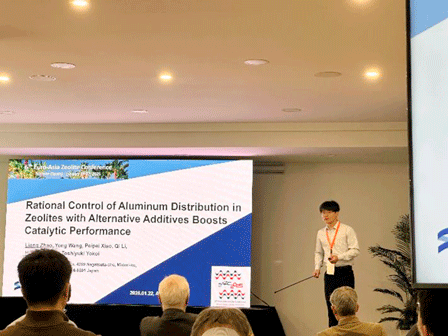
Personally, one of the highlights of the conference was the opportunity to deliver an oral presentation on my latest research, which focuses on the synthesis and characterization of zeolites with spatially controlled Al positioning and their application in methanol-to-olefins (MTO) reactions. My presentation, titled “Rational Control of Aluminum Distribution in Zeolites with Alternative Additives Boosts Catalytic Performance” attracted significant interest from both experimental and computational researchers. The ensuing discussion was both engaging and enlightening, with attendees offering valuable feedback and perspectives on potential future directions for this line of research. The session underscored the importance of fundamental material design in addressing real-world industrial challenges, particularly in catalysis and energy conversion. In addition to my own presentation, the keynote and plenary sessions were a treasure trove of insights into the latest advancements in zeolite research. Renowned scientists shared groundbreaking work on novel synthesis techniques, advanced characterization methods, and innovative applications of zeolites in catalysis, adsorption, and energy storage. These sessions highlighted the growing importance of interdisciplinary approaches in zeolite science, as well as the critical role of computational modeling in predicting and optimizing material properties.
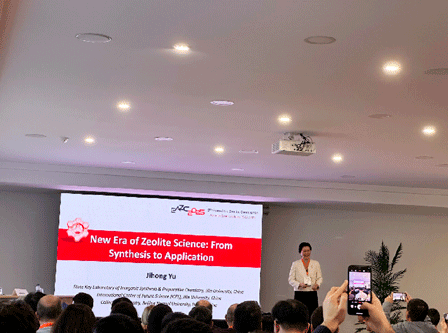
One of the most striking discussions at EAZC2025 revolved around the interdisciplinary applications of zeolites, which expanded my perspective on their potential beyond traditional roles in catalysis and adsorption. Professor Jihong Yu, for instance, presented pioneering research on the use of zeolites in antiviral applications, particularly their ability to eliminate cowpox virus. Another noteworthy presentation focused on the use of templating agents to precisely control Al incorporation in zeolites, a topic that resonated deeply with my own research interests. The discussions that followed were both thought-provoking and inspiring, leading to potential ideas for future collaboration. These interdisciplinary explorations underscored the versatility of zeolites and their potential to address a wide range of global challenges, from environmental sustainability to healthcare.
The poster sessions at EAZC2025 were another standout feature, offering a vibrant forum for researchers to showcase their work and engage in meaningful discussions. I was particularly impressed by the diversity of topics and the creativity displayed in addressing complex challenges in zeolite science. Several posters focused on innovative methods for controlling Al incorporation during zeolite synthesis, a topic closely aligned with my own research. One poster that captured my attention explored the use of templating agents to achieve a more uniform distribution of Al atoms in zeolite structures. This approach not only aligns with my work but also opened up new avenues for potential collaboration.
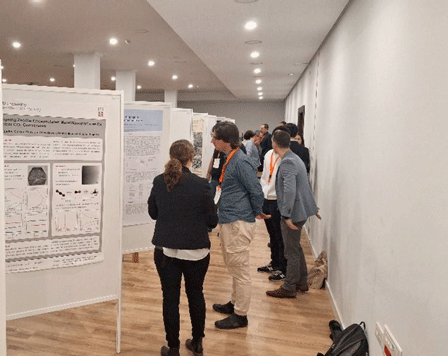
Another fascinating aspect of the poster sessions was the emphasis on computational modeling and simulations. Researchers presented advanced techniques for predicting the structure and behavior of zeolites, enabling the design of materials with highly specific properties before physical synthesis. The integration of computational tools with experimental research is undoubtedly a promising direction for the future of zeolite science, and it is an area I am eager to explore further in my own work.
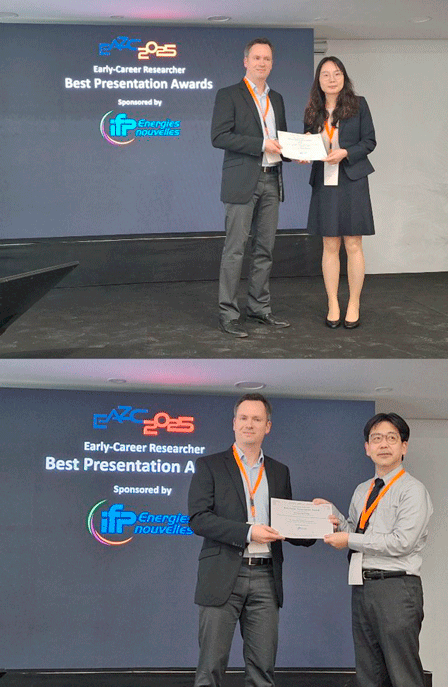
The most rewarding aspects of the conference was the opportunity to connect with researchers who share similar interests and aspirations. I had the pleasure of engaging in insightful discussions with two distinguished early-career researchers from the Japan Zeolite Association (JZA), both of whom were recognized for their outstanding contributions:
These interactions with them provided me valuable insights into novel synthesis strategies and catalytic applications of zeolites, and we discussed potential collaborations that could bridge our complementary research interests. I am deeply grateful to the JZA committee for their financial support, which enabled me to attend this high-level conference and gain a broader perspective on the global advancements in zeolite science.
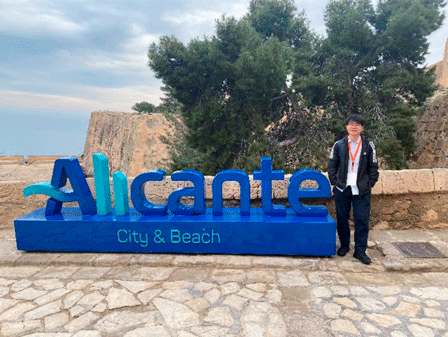
Beyond the academic rigor of the conference, the city of Alicante left an indelible impression on me. Under the guidance of Mr. Martinez, one of the conference organizers, and a humorous local tour guide, we explored the city’s stunning natural scenery, historic landmarks, and vibrant culture. The breathtaking views from Santa Bárbara Castle and the serene beaches provided a perfect backdrop for informal discussions with fellow researchers, fostering a sense of camaraderie and collaboration. The city’s rich history and vibrant atmosphere added a unique dimension to the conference experience, making it both intellectually stimulating and personally enriching.
The 6th Euro-Asia Zeolite Conference was a profoundly enriching experience, offering me the chance to learn from some of the brightest minds in zeolite research, as well as to share my own work with the scientific community. The conference provided an invaluable platform for exchanging ideas, discovering new research directions, and forging lasting connections with experts from around the world.
In conclusion, this conference has significantly expanded my horizons, both scientifically and professionally. I am now more motivated than ever to continue my research on Al distribution in zeolites and to explore new avenues for collaboration with colleagues and experts in the field. The insights and connections I gained at EAZC2025 will undoubtedly have a lasting impact on my future research endeavors, and I look forward to the next opportunity to gather with my peers in the zeolite community.
This page was created on 2025-04-09T09:29:53.257+09:00
This page was last modified on
このサイトは(株)国際文献社によって運用されています。